If you’ve ever had a canker sore, you know the misery it can cause – a small lesion that makes eating, talking, and even smiling uncomfortable. For patients who suffer from recurrent aphthous stomatitis (the clinical name for canker sores) or other oral ulcers, a fast-growing treatment option is bringing relief in ways that topical gels and rinses often can’t match therapeutic laser therapy.
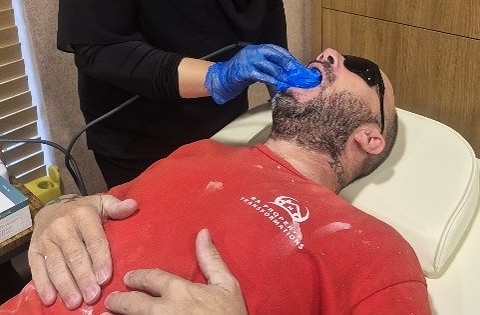
Also known as low-level laser therapy (LLLT) or photo biomodulation, this treatment uses a low-power diode laser, typically in the 600–1000 nanometre range ,to deliver light energy directly to the ulcer site. Unlike surgical or cutting lasers, these devices don’t heat, cut, or ablate tissue. Instead, they stimulate cellular activity at the site of the wound, encouraging the body’s own healing processes to work faster and more efficiently.
The treatment is quick, often just seconds to a couple of minutes per lesion, painless and requires no anaesthesia or downtime. Patients typically feel pain relief almost immediately.
Laser light absorbed by cells is thought to:
- Boost mitochondrial activity, giving cells more energy to repair tissue
- Reduce inflammation at the ulcer site
- Increase local blood flow, supporting faster tissue regeneration
- Interrupt pain signals, providing rapid symptomatic relief
Traditional treatments for ulcers, such as topical corticosteroids, antimicrobial rinses, or numbing gels, primarily manage symptoms and may take days to show real benefit. Laser therapy offers a few distinct advantages:
- Immediate pain relief for many patients, often felt right after treatment
- Faster healing times, shortening the overall discomfort window
- No medication required, which is appealing for patients who prefer to avoid steroids or for whom topical medications are difficult to apply (e.g., ulcers in hard-to-reach areas)
- Minimal side effects, since the treatment doesn’t involve drugs or tissue removal
- A quick in-office procedure that fits easily into a routine dental visit
Laser therapy is most commonly used for minor recurrent aphthous ulcers (canker sores), but it’s also being explored for other oral mucosal lesions, including ulcers related to certain systemic conditions and oral lesions from chemotherapy or radiation (a related application known as photobiomodulation for oral mucositis).
Therapeutic laser treatment represents a simple, evidence-supported addition to the toolkit for managing painful oral ulcers. It won’t prevent canker sores from recurring, but for the days when a lesion does appear, it offers a fast, comfortable way to ease pain and speed healing – no needles, no medication, and no downtime.
Have Questions about whether laser therapy will work for you or not?
Contact us: info@hmrehabbasics.co.uk 0800 779 7251
Clinic Locations: Northampton, Milton Keynes, Luton & Home Visits